SpaceTube Interior - A city inside a rotating space cylinder

The Next Giant Leap

A Manhattan in Space

Not a cramped station. Not a hostile planet. A rotating cylinder where cities, forests, and lakes exist under Earth-normal gravity—permanently habitable, infinitely scalable.

7.2 km
Diameter
1.0g
Earth Gravity
2× Manhattan
Land Area
0.5 RPM
Rotation
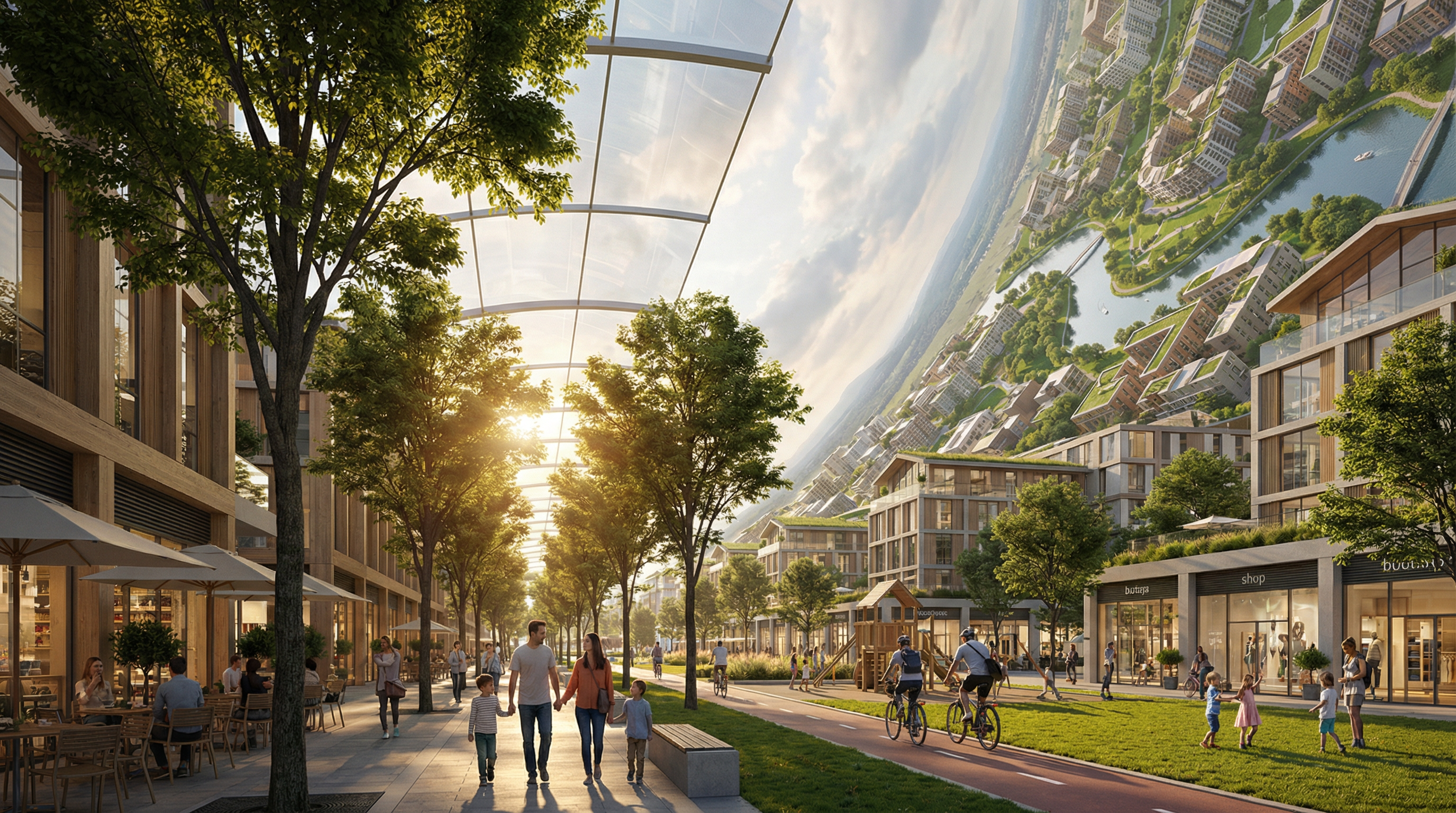
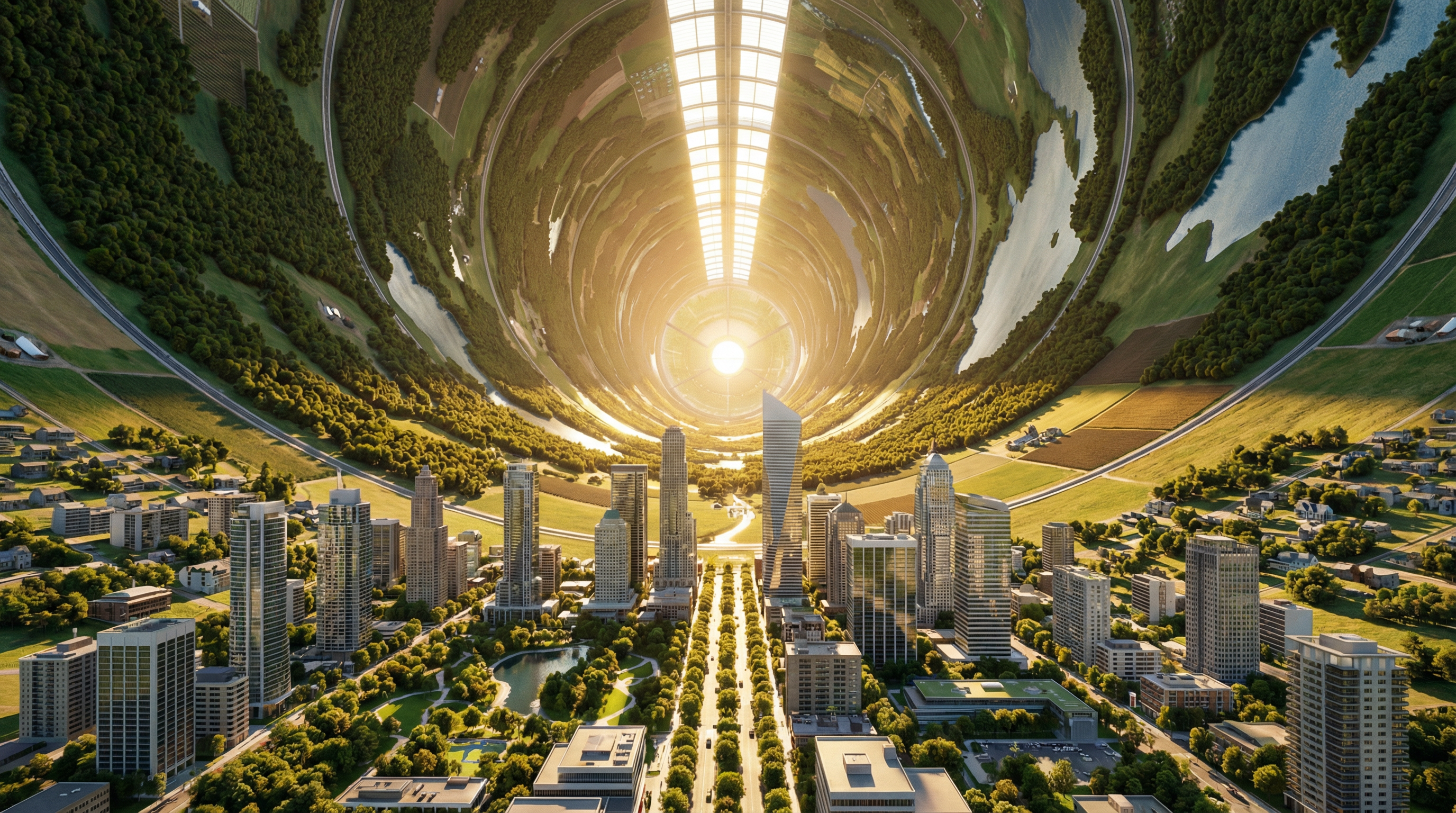
Imagine waking up in a world that wraps around you.

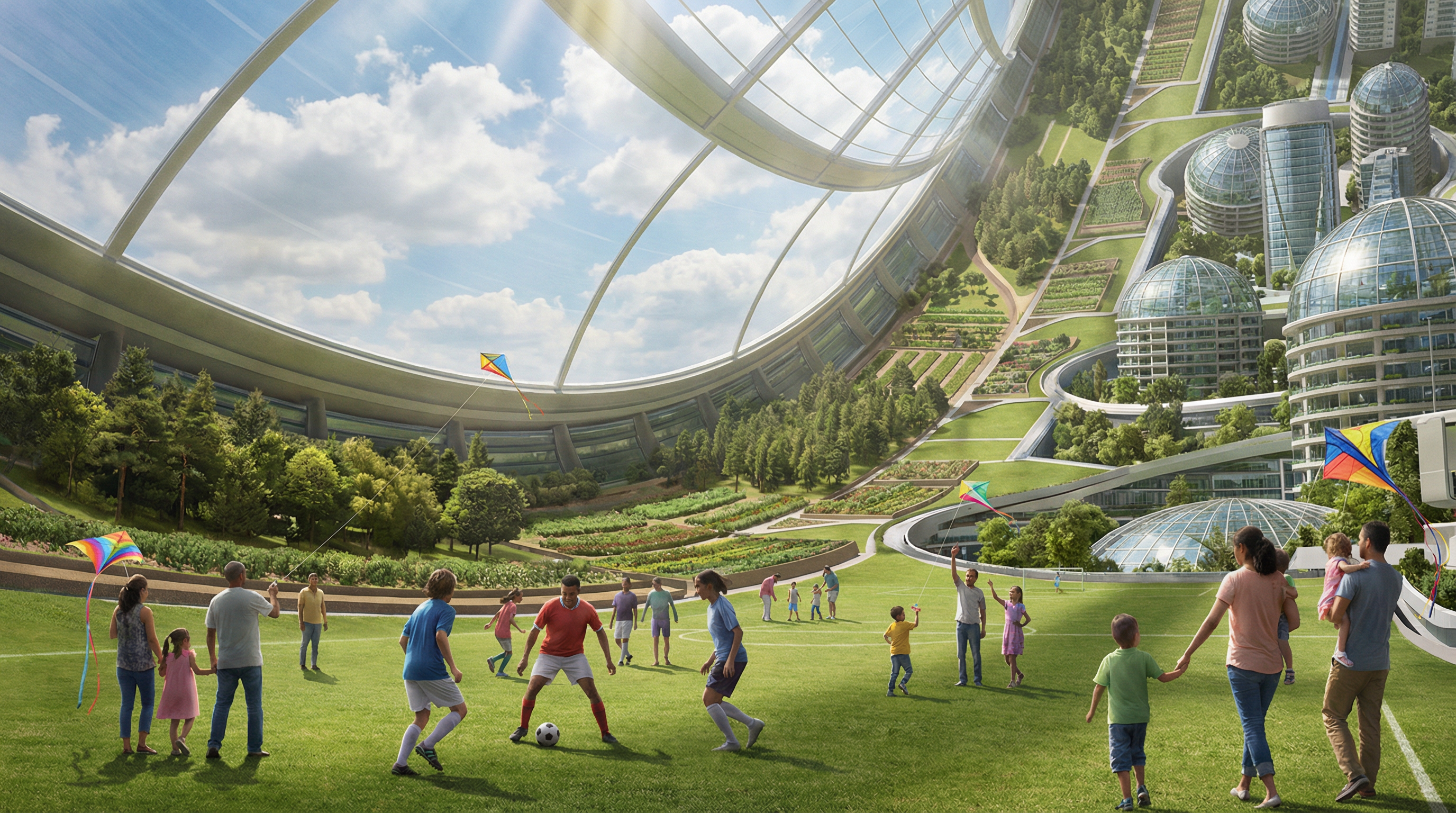
You step outside your home. Children are playing soccer in the park. A river winds through forests toward distant hills. The sun rises on schedule. Everything feels completely normal—except when you look up, you see more neighborhoods, more parks, more life curving overhead.

This is SpaceTube. Not a space station. Not a survival bunker. A city-scale world where millions can live, work, and raise families in perfect Earth-like conditions.

"This is not a toy habitat. It's a city-scale, permanent human world."
Life inside SpaceTube - families walking through parks with the world curving overhead

Bigger than you think. More buildable than you'd expect.

"Our habitat has a diameter comparable to the CERN Large Hadron Collider—except instead of a tunnel underground, it's a livable world rotating in space."

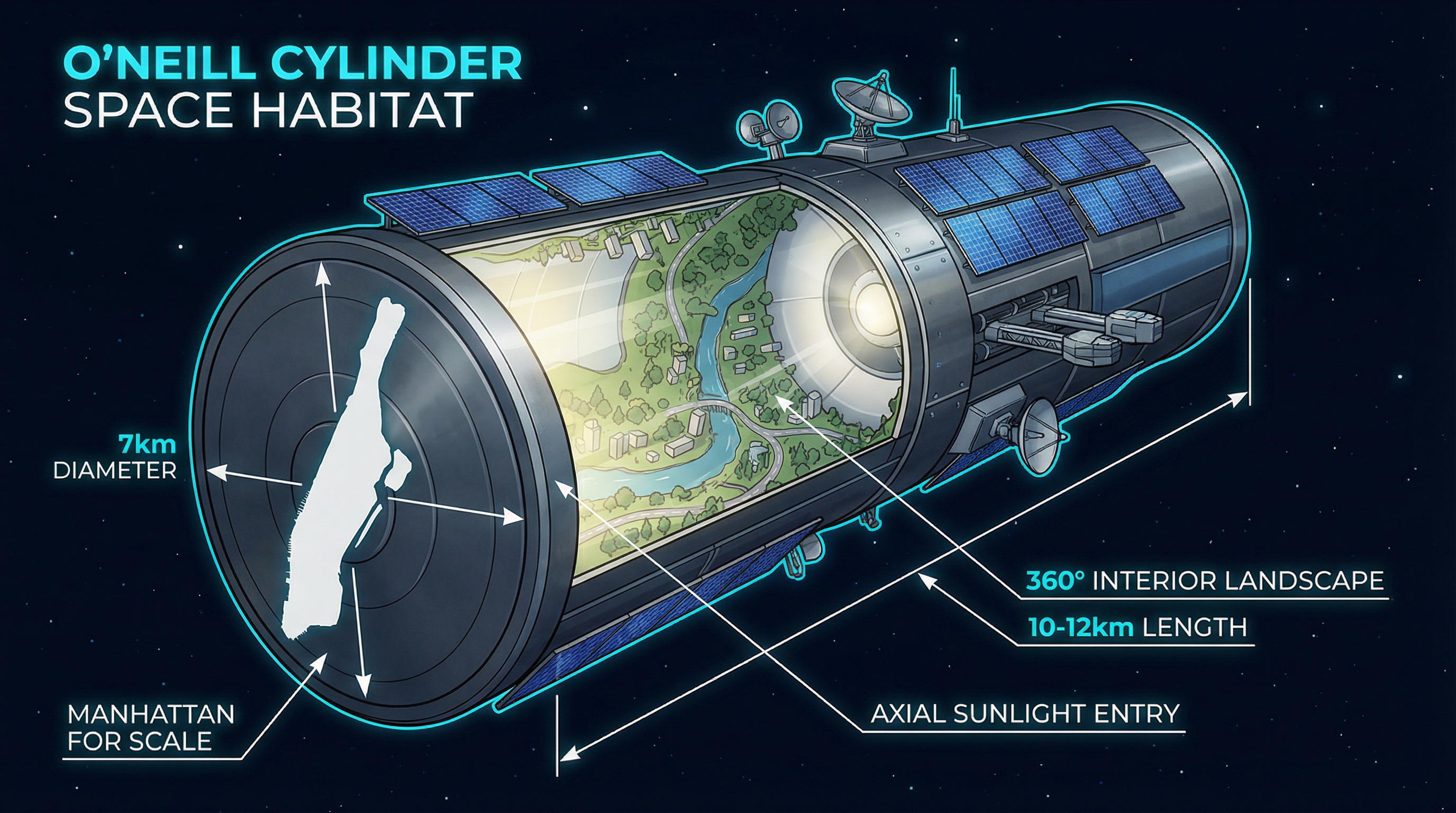
Scale comparison showing SpaceTube with Manhattan overlay
~8.6 km
LHC Diameter
7.2 km
SpaceTube Diameter
1.3 km
Golden Gate Span
~5 km
Palm Jumeirah

Earth-normal living, off Earth.

Sports, forests, lakes, cities—everything you'd expect from a thriving civilization, engineered from first principles.

🌍

True 1g Gravity

At 0.5 RPM, Coriolis effects are imperceptible. Sports, walking, and daily life feel completely Earth-normal.

☀️

Natural Daylight

Axial mirrors deliver real sunlight along the cylinder's length. Day/night cycles, seasons, and weather are all controllable.

🏔️

Long Sightlines

2-3 km unobstructed views with gentle terrain, forests, and atmospheric haze create a convincing "outdoor" experience.

🛡️

Radiation Shielded

Regolith and water shielding provides full protection. The shielding mass is structural, not parasitic.

🌿

Hybrid Biosphere

ISS-proven ECLSS backbone with bioregenerative modules. Compartmentalized so biology never becomes existential.

📐

Scalable by Length

Once diameter is set for 1g, you add acres by extending length. Same RPM, same gravity, more world.

Why build cities in space instead of on Mars?

Mars has gravity you can't change, an atmosphere you can't breathe, and dust that will kill you. SpaceTube gives you Earth-normal everything—without being trapped at the bottom of another gravity well.

SpaceTube
Mars Surface
Gravity
1.0g (tunable)
0.38g (fixed)
Atmosphere
Earth-like, controlled
Toxic CO₂, 0.6% pressure
Radiation
Shielded by design
Constant exposure
Day/Night
Controllable 24h cycle
24.6h, dust storms
Scalability
Add length, add acres
Dome by dome
Return to Earth
Weeks
26-month windows

How SpaceTube works

SpaceTube is a physics machine with controllable dials: gravity, sunlight, air, shielding, and redundancy. The trick is treating habitability and safety as first-order design requirements.

🔄

Rotation = Gravity

Spin at 0.5 RPM with a 3.6 km radius delivers exactly 1g at the floor. Centrifugal force points "down"—always away from the axis. Low RPM means minimal Coriolis effects.

☀️

Axial Sunlight

External heliostats track the Sun and feed light through axial windows. Internal louvers control day/night, crop cycles, and emergency blackout for radiation storms.

🛡️

Layered Structure

Not a single shell—a system: primary tension structure, pressure liner, then shielding mass. At this scale, shielding dominates, not rotational stress.

🌿

Hybrid Biosphere

Physicochemical backbone (ISS-style ECLSS) for survival. Bioregenerative modules for closure improvement. Compartmentalized so biology is never existential.

🏘️

District Isolation

Interior divided into districts with bulkheads. A leak or fire affects one district, not the whole habitat. "Station lost" becomes "district offline."

📏

Scale by Length

Once diameter is set for 1g, you add acres by extending length. A 3km tube is San Francisco. A 10km tube is Paris. Same RPM, same gravity, more world.

Baseline specifications

Reference parameters for a 1g habitat at 0.5 RPM. Every number is derived from physics, not aspiration.

Geometry & Gravity

Rotation rate 0.5 RPM
Radius for 1g ~3.58 km
Diameter ~7.16 km
Circumference ~22.5 km
Floor gravity 1.0g (9.81 m/s²)

Land Area by Length

2 km length ~45 km² / 11,100 acres
3 km length ~67.5 km² / 16,700 acres
5 km length ~112.5 km² / 27,800 acres
10 km length ~225 km² / 55,600 acres
Scale reference 3km ≈ San Francisco

Atmosphere

Internal pressure 75–80 kPa
Earth equivalent 6,000–8,000 ft elevation
O₂ partial pressure ~21 kPa (sea-level equivalent)

Human Factors

Coriolis effects Minimal at 0.5 RPM
Head movement Earth-normal feel
Sports & activity Fully compatible

Throughput-first roadmap

Treat SpaceTube like a manufacturing scale problem: validate the physics with prototypes, build the mass-throughput supply chain, then assemble at industrial cadence.

1

Freeze a Reference Design

Lock geometry, pressure, daylight architecture, compartmentation, and safety case. Create a digital twin for operations and failure modes.

→ "SP-413 style" brief + hazards analysis + redundancy map
2

Artificial-Gravity Demonstrator

Build a smaller rotating habitat to de-risk human factors, rotating utilities, seals, and long-duration maintenance.

→ Crewed AG testbed with weeks-to-months operations
3

Life Support: Backbone → Hybrid Closure

Deploy robust ECLSS backbone first, then integrate bioregenerative modules under tight control and compartment limits.

→ Proven life support with closure improvement path
4

Mass Throughput: Shielding Supply Chain

Establish mining + processing + transport for bulk shielding mass. This is the gating item for deep-space permanence.

→ Tonnes/day pipeline, measured like a commodity industry
5

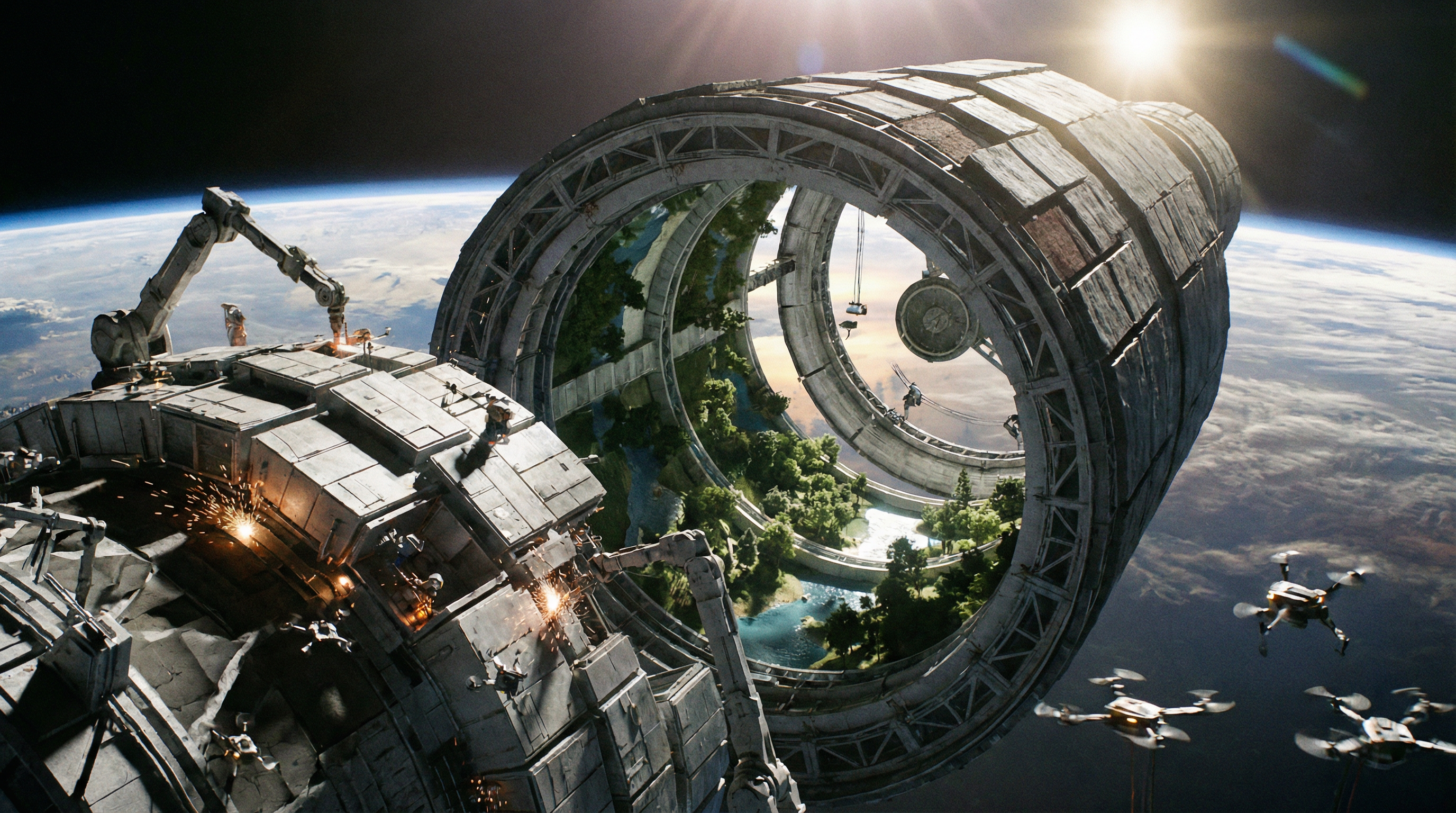
Assemble the First SpaceTube (2–3 km class)

Modular assembly: primary structure → pressure liner → shielding → interior buildout. Run it like a shipyard that never stops.

→ 11k–17k acre 1g habitat, compartmented into districts
6

Scale by Length (5–10 km)

Once the manufacturing line is stable, scaling becomes straightforward: extend length to add acres and people without increasing RPM.

→ Archipelago of tubes with shared industrial backbone

Concerns addressed

The hard parts are well-known: pressure loads, shielding mass, MMOD, leak response, and closed-loop reliability. The knobs are known too.

Yes. At 0.5 RPM with a 3.6 km radius, Coriolis forces are imperceptible for normal activities. Head turns, walking, sports, and daily life feel Earth-normal. This is well within the comfort zone identified by human factors research (Theodore Hall and others). Most people would adapt within hours, not days.
Not with the right design. SpaceTube uses 75-80 kPa internal pressure (equivalent to 6,000-8,000 ft elevation)—fully livable while significantly reducing structural loads. The structure is layered: primary tension frame, separate pressure liner, then shielding mass. At this scale, shielding mass dominates, not rotational stress. And the interior is compartmented into districts with bulkheads—a leak affects one district, not the whole habitat.
They're challenges, not show-stoppers. Radiation shielding is solved with mass—regolith, water, or processed asteroid material. The shielding layer is structural, carried by the frame, not parasitic weight. MMOD protection uses Whipple-style multi-layer shields, the same approach proven on ISS. The key insight: at this scale, you have the mass budget to do both properly.
That's why SpaceTube uses a hybrid approach. The backbone is physicochemical ECLSS (ISS-proven technology)—reliable, predictable, maintainable. Bioregenerative modules are added incrementally, under tight monitoring, for closure improvement. The system is compartmentalized so biology can never become existential. If a bio-module fails, you isolate it and fall back to the backbone.
By pointing to what already exists. The LHC is 27 km in circumference—humans already build at this scale. The physics of rotating habitats was validated in the 1970s NASA studies (SP-413). The materials are known: high-strength steel, aluminum alloys, basalt fiber composites. The challenge isn't physics or materials—it's industrial throughput. Build the factory that builds the city.
Mars gives you 0.38g forever. You can't change planetary gravity. SpaceTube gives you 1g by design, with tunable parameters for everything else: atmosphere, radiation, day/night, scalability. Mars traps you at the bottom of a gravity well with 26-month return windows. SpaceTube is weeks from Earth. Mars is a backup planet. SpaceTube is a new category of world.

Build with us.

SpaceTube is a program, not a poster: prototypes, throughput, then shipyard assembly. If you have launch, robotics, mining, life support, or megastructure experience—let's talk.